Tuesday, November 22, 2011

Some of my favorite shots of late (they're not all mine - in fact, only 1 is)...

Roller magic near Gelai
Our new favorite picnic spot, 5 minutes from our house
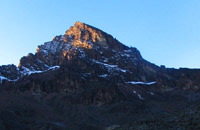
Day is done... gone the sun... from the lakes... from the hills... from the sky...

Bold Leaders 2011 selected - two from Kisa!!

We're so proud of our two Kisa scholars, Victoria and Margaret, selected to participate in this year's exchange to the US, a program facilitated by the US Embassy and Bold Leaders, a leadership organization based in Denver, like AfricAid's HQ.

Tanzanian Youth to Visit U.S. on Exchange ProgramsOn November 21, 2011, Public Affairs Officer Dana L. Banks and Peace Corps Country Director Andrea Wojnar-Diagne welcomed 19 students and two teachers to the embassy prior to their trip to the United States of America under the Bold Leaders and States' 4-H International exchange programs. The students will travel in two groups, ten from November through December 2011; and ten from October through November 2012. They will visit Denver, Colorado and Washington, D.C. as part of the program, and will be hosted by American families, schools, and communities, and have the opportunity to engage in leadership programs and activities with American youth and exchange participants from other countries.

Peace Corps Country Director Wojnar-Diagne urged the students to take advantage of the opportunities presented by the program to learn more about the world outside of their communities and to empower others following their return to Tanzania. The experience that will be accrued from this program will have great impact if all of you share it will others in your communities. The Bold Leaders Program that has the potential to transform lives as evident from those who have participated previously. It is especially significant that participants are drawn from many regions across Tanzania, thereby providing a full and balanced representation of all Tanzanians."

Underscoring U.S. support for higher education in Tanzania, Education USA Advisor Ms. Frida Mwenegoha briefed the students on academic counseling programs offered by the embassy and services offered by the Information Resource Center. Cultural Affairs Assistant Mr. Honory A. Jerome provided a pre-departure briefing on the exchange programs' travel logistics.

Bold Leaders is a Social Profit organization with headquarters in Denver, Colorado dedicated to providing leadership development and training services for young people and adults all over the world. The program has served people, organizations and communities in Cambodia, Cyprus, the Czech Republic, Germany, Hungary, Kenya, Nigeria, Northern Ireland, Slovakia, South Africa, Tanzania, Turkey, and the United States. For additional information please see: http://www.boldleaders.org/.

States' 4-H International Exchange Programs (S4-HIEP) a not-for-profit educational and cultural organization which provides international, educational, experiential opportunities for young people to develop positive cross-cultural attitudes and communication skills that encourage lifelong friendships, mutual understanding, and acceptance of all peoples. For additional information please see: http://states4hexchange.org/.

http://tanzania.usembassy.gov/pr_11222011.html

Saturday, September 03, 2011

AfricAid/Kisa 1st Career Day - August 27, 2011


We're still reeling from this big day last week for our 82 Kisa scholars in secondary schools around Arusha and Monduli. We all left with full hearts, students, staff and guests alike. We hope to host more inspiring events like this down the road...

The Rugged Altruists

The Rugged Altruists * By DAVID BROOKS * OP-ED COLUMNIST w/ NYTIMES
http://www.nytimes.com/2011/08/23/opinion/brooks-the-rugged-altruists.html?_r=2&emc=eta1

Many Americans go to the developing world to serve others. A smaller percentage actually end up being useful. Those that do have often climbed a moral ladder. They start out with certain virtues but then develop more tenacious ones.

The first virtue they possess is courage, the willingness to go off to a strange place. For example, Blair Miller was a student at the University of Virginia who decided she wanted to teach abroad. She Googled “teach abroad” and found a woman who had been teaching English in a remote town in South Korea and was looking for a replacement.

Miller soon found herself on a plane and eventually at a small airport in southern South Korea. There was no one there to greet her. Eventually, the airport closed and no one came to pick her up. A monk was the only other person around and eventually he, too, left and Miller was alone.

Finally, a van with two men rolled in and scooped her up. After a few months of struggle, she had a fantastic year at a Korean fishing village, the only Westerner for miles and miles. Now she travels around Kenya, Pakistan and India for the Acumen Fund, a sort of venture capital fund that invests in socially productive enterprises, like affordable housing and ambulance services.

The second virtue they develop is deference, the willingness to listen and learn from the moral and intellectual storehouses of the people you are trying to help.

Rye Barcott was a student at the University of North Carolina who spent a summer sharing a 10-by-10 shack in Kibera, the largest slum in Nairobi, Kenya. One night he awoke with diarrhea and stumbled to the public outhouse. He slid onto the cement floor and vomited as his bare body hit puddles of human waste.

He left his soiled pants outside the hut, but when he went to find them later they were gone. He was directed to another hut where a stick-thin girl, with missing clumps of hair, had the pants, scrubbed and folded, in her lap. Barcott said softly, “I’m grateful,” and asked her why she had cleaned them. “Because I can,” she replied. A week later, she died of AIDS and her body was taken in a wheelbarrow to a communal grave.

Over the next several years, Barcott served as an officer in the Marines in places like Iraq and created an inspiring organization called Carolina for Kibera, which offers health services and serves as a sort of boys and girls club for children in the slum.

The greatest and most essential virtue is thanklessness, the ability to keep serving even when there are no evident rewards — no fame, no admiration, no gratitude.

Stephen Letchford is a doctor working in Kijabe, Kenya. One night, years ago, when he was working at a hospital in Zambia, a man stole a colleague’s computer. Letchford drove the police down the single road leading from town. The police found the man carrying the computer and, in the course of the arrest, shot him in the abdomen.

They put the man in the back of the car and rushed him back to the hospital to save his life. Letchford pressed his wounds to stem the bleeding, using tattered garbage bags as surgical gloves. He had scraped his hands gardening that day and was now covered by the man’s blood.

They saved the thief’s life and discovered he was infected with H.I.V. For several days, Letchford and his family were not sure whether he had been infected by the man who robbed them. Their faith was tested. (They later learned that he was not infected.) When the man recovered, he showed no remorse, no gratitude; he just folded in on himself, cold and uncommunicative.

This final virtue is what makes service in the developing world not just an adventure, a spiritual experience or a cinematic moment. It represents a noncontingent commitment to a specific place and purpose.

As you talk to people involved in the foreign aid business — on the giving and the receiving ends — you are struck by how much disillusionment there is.

Very few nongovernmental organizations or multilateral efforts do good, many Kenyans say. They come and go, spending largely on themselves, creating dependency not growth. The government-to-government aid workers spend time at summit meetings negotiating protocols with each other.

But in odd places, away from the fashionableness, one does find people willing to embrace the perspectives and do the jobs the locals define — in businesses, where Westerners are providing advice about boring things like accounting; in hospitals where doctors, among many aggravations, try to listen to the symptoms the patients describe.

Susan Albright, a nurse working with disabled children in Kijabe, says, “Everything I’ve ever learned I put to use here.” Her husband, Leland Albright, a prominent neurosurgeon, says simply, “This is where God wants us to be.”

Tuesday, July 19, 2011

Tanzania do something!

Will Dar face a total blackout in 60 days?
By Florian Kaijage - 17th July 2011


Minister of Energy and Minerals, William Ngeleja

For Tanzanians who have tested the benefits and joys of electricity-facilitated modernity, the backward march towards the dark ages is a real threat, as the latest long-stretch electricity rationing is set to worsen. The Guardian On Sunday has reliably learnt that most hydro-electricity generating units countrywide face closure over the next 60 days, translating into more suffering for people whose livelihood and recreation are dependent on reliable power supply. The threat is more ominous on the national scale, by way of deadly blows to the economy of one of the poorest countries in the world, resulting from factory closures or highly reduced production schedules. Disruptions in social service delivery would be similarly hurtful. The nation’s threat of turning to near-total, or total darkness comes at a time when the country is enduring unending power rationing since December 2010, and the hours having lengthened to 12 hours during the day right and 6 hours at night.

This paper has been reliably informed that water level at Mtera dam, the biggest man-made lake in the country has terribly decreased to the extent that the two power generating units at the dam could only generate 8 Megawatts, equals to 10 percent of the installed capacity. A more worrying fact is that Mtera dam is not only an important for power generation at its units but is a water reservoir for Kidatu’s 4 power generation units which are currently generation less than 50 megawatts despite having a capacity to generate 204 megawatts. Water is released from Mtera to Kidatu during dry season or whenever the need arises. The two power generation centers lie on the grate Ruaha River stream. A well placed source at Tanzania Electric Supply Company (Tanesco) told The Guardian on Sunday this week Mtera could be shut down completely in the next 40 days and the same fate would befall Kidatu a few weeks later. “The situation is extremely bad and we do not know what would be happening in the near future because no water is added to the dams,” said the source, which preferred to remain anonymous.

This paper has also established that Hale generating unit which situated in Korogwe, Tanga with an installed capacity of 21 megawatts has been closed as it is unable to generate even a single megawatt and Nyumba ya Mungu unit in Simanjiro District in Manyara Region could generate only 2 megawatt out of 8 megawatts installed capacity. It could not be established how much power Kihansi in Morogoro and Pangani in Tanga generate currently, but it isn apparent that the megawatts produced
at both dams has dropped drastically. The installed capacity of Kihansi is 180 megawatt as Pangani can generate 68 megawatts at full capacity, totaling 248. A source at Tanesco revealed to this paper that the amount of megawatts contributed by hydro power units to the national grid system could not exceed 160 megawatts which is 28.5 percent of the installed capacity of 561 megawatts for all hydro power units.

And with no rains in sight over the next three months, and thus no additional water being fed into the dams, while the generating units continue to operate and consume the little available water, it is clear that the amount generated would be decreasing daily. Last week this paper quoted a senior Tanzania Meteorological Agency (TMA) official as saying that no rains are forecast in the next three months, until the onset of the rainy season in October.

The country has now been turning attention to gas from Songosongo Island as a source of power. However although the 4 plants available have a combined installed capacity of 411 megawatts, they are said to contribute less that 350 megawatt to the
national grid. The plants are Songas (191Mw) Tegeta (45), Symbion (75) and the one owned by Tanesco (100Mw). The national power demand at peak hour in the morning and at night is 833 megawatt with an increase of 14 percent annually.
And with the soaring power woes, the Minister of Energy and Minerals, William Ngeleja told the Parliament when tabling the budget speech for 2011/12 financial year about a long list of government projects aimed at bring about everlasting solution. However, the earliest project which would generate 100 megawatts is expected to be operational in December 2011. This is the project the government has been talking about since 2009.

Other projects cited by minister Ngeleja are Mwanza project (60Mw) to be ready in June 2012, Mnazi Bay (300Mw) to be completed during the 2013/14 financial year, Ruhudji (358 Mw) and Mpanga (165Mw) to be ready in 2015/16 and Somanga Fungu (230Mw) in 2013. Other projects according to Ngeleja are Kiwira (200Mw) which is scheduled to be operational in 2013/14, Ngaka Coal (400Mw), Mchuchuma (600Mw) and Rusumo 63 Mw which have no clear time table and Ramakali (222Mw) slated for 2018. The biggest power project among all is the Stiegler’s Gorge with a capacity to generate 2100 megawatts, which however has no schedule as to when the implementation would start and the eventual completion.

SOURCE: THE GUARDIAN

Sunday, May 22, 2011

AfricAid-US visits Arusha

Baba Ashley, Ashley and Mama Ashley of AfricAid-Colorado, USAElizabeth Abshire, soon to be AfricAid's new Executive Director, moi and Joseph Kitia, one of our favorite partners to work with in Usa River.

We're off to visit our partner schools and sites this week along with a team of US donors and supporters. Should be an action-packed May-June.

Friday, May 06, 2011

What everybody's talking about in A'town

Crowds Come Over Roads and by Helicopters for Tanzanian’s Cure-All Potion
By JEFFREY GETTLEMAN

NAIROBI, Kenya — He’s a sensation in two countries. He’s snarled traffic for miles. He’s so popular that people have literally died waiting in line to see him.

Ambilikile Mwasapile, a 76-year-old retired pastor in rural Tanzania, has been offering a herbal concoction that he bills as a miracle potion that can cure just about any illness. In the past few weeks, tens of thousands of sick people have scrambled for a sip of his homebrewed drink. Some, apparently, have even flown in by helicopter.

On Monday, Tanzanian officials said that several dozen elderly and sick people had recently paid the price for joining the throngs.

“They died from the long queues,” said Isidore Shirima, a local official in Arusha, a town popular with tourists about six hours’ drive from the pastor’s village. “We’re not going to stop this, but we want to organize it better.”

Mr. Mwasapile, a former Lutheran preacher, lives in Samunge, a village in the middle of the savannah near the Kenya-Tanzania border. He began administering his miracle potion several months ago, and charges about 30 cents a cup. He says it can cure AIDS, cancer, diabetes, high blood pressure — you name it.

According to The Daily Nation, Kenya’s largest newspaper, Tanzanian officials have tested the herbs in the concoction and have verified that it is safe to drink. Mr. Mwasapile even has a Facebook page, listed under “Doctor, Arusha, Tanzania.”

Traditional healers are not considered fringe elements here. Sometimes, their teachings take macabre directions. In Tanzania, so many people believe, for example, that the body parts of albinos carry good luck, that dozens of albino people have been killed by thugs, who then sell their bones, hair and skin for thousands of dollars.

Mr. Mwasapile’s village is remote, with no good roads, and is hard to reach from any sizable town. It can take people from either side of the border days to reach him, with the elderly and sick camping out under trees on the way.

He issued a statement over the weekend saying that he planned to halt new arrivals to his village for a week, until he could serve everyone who was already camped out there.

Esther Lally, a recent college graduate living in Arusha, said she saw helicopters landing in the bush ferrying Tanzanian politicians to the village. She said that the potion worked.

“It’s all about faith,” said Mrs. Lally, who drank it herself two weeks ago. “If you believe that this works, it works. I saw many people there who had gotten better.”

Mrs. Lally wanted the potion to cure her ulcers, and she said she was already feeling better.

She said the drink “tastes like tea, without the sugar.”

A version of this article appeared in print on March 29, 2011 in the New York Times. Thanks Alilala ;)

Monday, March 28, 2011

In honor of women's history month

This post is part of a month-long series featuring Greatest Women of the Day, in recognition of Women's History Month. Huffington Post continues to showcase women making change -- big and small -- around the world. In partnership with She's The First, they featured this letter from a young Tanzanian, Elizabeth David; in it, she shares her story, goals and role models. She is one of the students we work with in the KISA project:

I'm Elizabeth David. I'm 19 years old and I live in Kilimanjaro, Tanzania. I study at Arusha Secondary School, which is a boarding school. I'm in my last year of advanced level (A-level), and I take three main subjects, which are history, geography, and economics, and also two subsidiaries, which are basic applied mathematics and general studies. My goals are to be a successful businesswoman in 10 years and to help Tanzanian women in any way I can.

In my first year of A-level at Arusha Secondary, I joined the Kisa Project. It's a project which deals with providing leadership education to girls in Tanzania. In Kisa, we did different projects like teaching computer at our school. Also, we had a leadership summit of 10 days in which we got many guest speakers from different places and occupations. Some were women lawyers and
successful businesswomen and leaders. They inspired me a lot and made me realize that I want to be a role model to my fellow African women and girls and also help them in any way I can.

In Women's History Month, there are a lot of women who inspire me to reach this goal and overcome any obstacle that I may face. One of them is my mom, Mrs. Suzan Samson. I admire the courage she has shown in raising me and my two elder sisters, making sure that my sisters get a good education and go to university. She has always shown herself to be a strong, tolerant, loving woman who is always ready to help others in need, even if she doesn't have much herself. Also, I learn from Oprah Winfrey, she had passed through a lot of hardships in life but turned out to be a very successful woman. And Dr. Anna Makinda, my fellow Tanzanian who is the first woman to be a parliament speaker in our country.

Tanzanian women are very hardworking women. They struggle a lot so that their children won't starve or not get education. Although to some extent men still see them as inferior, nowadays the women don't care about it anymore. Instead, they put extra efforts, and they end up proving the men wrong. A lot of Tanzanian women who were just housewives decide to get out of their houses and start their own small businesses -- from them they have succeeded to build their own houses, put the kids in school, and cover other daily house expenses. So I might say that Tanzanian women are very strong, tolerant and courageous.

Love,
Elizabeth


http://www.huffingtonpost.com/2011/03/18/in-her-own-words-a-young-_n_837755.html

Tuesday, February 08, 2011

The Best Investment by Nancy Gibbs [Time magazine]

We know what the birth of a revolution looks like: A student stands before a tank. A fruit seller sets himself on fire. A line of monks link arms in a human chain. Crowds surge, soldiers fire, gusts of rage pull down the monuments of tyrants, and maybe, sometimes, justice rises from the flames.

But sometimes freedom and opportunity slip in through the back door, when a quieter subversion of the status quo unleashes change that is just as revolutionary. This is the tantalizing idea for activists concerned with poverty, with disease, with the rise of violent extremism: if you want to change the world, invest in girls.

In recent years, more development aid than ever before has been directed at women--but that doesn't mean it is reaching the girls who need it. Across much of the developing world, by the time she is 12, a girl is tending house, cooking, cleaning. She eats what's left after the men and boys have eaten; she is less likely to be vaccinated, to see a doctor, to attend school. "If only I can get educated, I will surely be the President," a teenager in rural Malawi tells a researcher, but the odds are against her: Why educate a daughter who will end up working for her in-laws rather than a son who will support you? In sub-Saharan Africa, fewer than 1 in 5 girls make it to secondary school. Nearly half are married by the time they are 18; 1 in 7 across the developing world marries before she is 15. Then she gets pregnant. The leading cause of death for girls 15 to 19 worldwide is not accident or violence or disease; it is complications from pregnancy. Girls under 15 are up to five times as likely to die while having children than are women in their 20s, and their babies are more likely to die as well.

There are countless reasons rescuing girls is the right thing to do. It's also the smart thing to do. Consider the virtuous circle: An extra year of primary school boosts girls' eventual wages by 10% to 20%. An extra year of secondary school adds 15% to 25%. Girls who stay in school for seven or more years typically marry four years later and have two fewer children than girls who drop out. Fewer dependents per worker allows for greater economic growth. And the World Food Programme has found that when girls and women earn income, they reinvest 90% of it in their families. They buy books, medicine, bed nets. For men, that figure is more like 30% to 40%. "Investment in girls' education may well be the highest-return investment available in the developing world," Larry Summers wrote when he was chief economist at the World Bank. Of such cycles are real revolutions born.

The benefits are so obvious, you have to wonder why we haven't paid attention. Less than 2¢ of every development dollar goes to girls--and that is a victory compared with a few years ago, when it was more like half a cent. Roughly 9 of 10 youth programs are aimed at boys. One reason for this is that when it comes to lifting up girls, we don't know as much about how to do it. We have to start by listening to girls, which much of the world is not culturally disposed to do. Development experts say the solutions need to be holistic, providing access to safe spaces, schools and health clinics with programs designed specifically for girls' needs. Success depends on infrastructure, on making fuel and water more available so girls don't have to spend as many as 15 hours a day fetching them. It requires enlisting whole communities--mothers, fathers, teachers, religious leaders--in helping girls realize their potential instead of seeing them as dispensable or, worse, as prey.

A more surprising army is being enlisted as well. A new initiative called Girl Up girlup.org aims to mobilize 100,000 American girls to raise money and awareness to fight poverty, sexual violence and child marriage. "This generation of 12-to-18-year-olds are all givers," says executive director Elizabeth Gore, the force of nature behind the ingeniously simple Nothing but Nets campaign to fight malaria, about her new United Nations Foundation enterprise. "They gave after Katrina. They gave after the tsunami and Haiti. More than any earlier generation, they feel they know girls around the world."

And so the word goes out, by text, by tweet, on Facebook, that coming soon to a high school gym near you may be a Girl Up pep rally, where kids can learn what it feels like to carry a jerrican of water for a long distance, or how sending $5 to Malawi can stock a health clinic with girl-friendly materials or buy school supplies. Or how $5 to Ethiopia can make the difference in a girl's not being married when she's 10. And one at a time, a rising generation of American girls helps create the next generation of leaders, for the coming quiet revolutions.

Read more: http://www.time.com/time/magazine/article/0,9171,2046045-1,00.html#ixzz1DR0n2h61

Wednesday, January 05, 2011

Heri ya Krimasi na mwaka mpya!

Happy New Year friends. It's been quite a year. We got married. My brother got married. We moved into a real house. I started a new job 2 days ago. And I'm feeling super thankful for it all. One thing I'm most thankful for is our great friends and nextdoor neighbors' successful adoption of this precious one, Zara Grace. Radiant she is. Zac is here saving her body outline for posterity with street chalk. How she's grown already...
Mary says Happy 2011 with a fresh glass o carrot juisi. Cheers!I'll close w/ a fun pic from our Christmas day. One of our neighborhood guys came over that morning to ask Hunter to help him tie his tie for Christmas service. I guess he doesn't wear them much :) More hilarious is his pilot-style shirt. Lots of pilots live around us as we're very close to the Arusha domestic airport. I'm sure that's how he landed [pun intended] this sweet one

Sunday, October 24, 2010

Our wedding rocked

http://vimeo.com/16064003 [our wedding slideshow by photographer Ian Riley]

http://www.youtube.com/watch?v=N99LsSAqImw [Thanks to Uncle Rob for filming this one]

http://www.vimeo.com/16154751 [Cheers to Sterling for this slideshow. The Man]

More coming...

Sunday, August 15, 2010

Lisa and Byro's 28th anniversary of marriage

Hunter's recreating the pillows of 236 Hurumzi in Stonetown for this lovely gang...Celebrating over the Olasiti korongo...
Introducing the newest member of their family...
Needless to say, this little creature makes Hunter and I want a dog. Badly. We also want as solid a marriage and family. May I add, I hope we have as lovely offspring, inside and out. Ha. That sounds funny, but I mean it. The Bordens give us so much to look up to, to strive for in our life ahead as husband and wife, mother and father, sister and brother to so many...

Monday, August 09, 2010

this doesn't happen everyday...

Hunter and I enjoying a goat roast with some friends, Life Skills teachers from PHS
A co-worker from PHS, Elaina, and my bro Angelo, the party chairman
Another thing which doesn't happen every day is engagement parties - not too common in our neck of the woods. Our first hosted in Atown from afar by a family friend in Atlanta:
Hannah, Zac, Lisa and Jesse (a good substitute for his Daddy-O)
Tammy and Peter Russell
Ian and Ciska Haynes, our infamous South African invitees - Ciska's Visa fresh in!
Eo!
Double Eo!!
That last shot is just totally inappropriate, Zac. I'm proud to say he's my new drum teacher.

Thursday, August 05, 2010

I'm unemployed!

On my very first day of being unemployed, I received the following email from my dearest darling sibling King Cc'ing all of my future in-laws:

Michelle (his fiance) brought up a bunch of mail that has been forwarded to her house while I am in New York this summer. I have a very interesting picture of Tait driving my car through montgomery county, maryland during her most recent trip home. 44 mph in a 30. If anyone would like a wallet sized copy of the picture, the police department kindly sent 4 with the ticket. At least I don't have to worry about finding a wedding present now!

Thank you brother.

Monday, July 19, 2010

MIA

I admit it fully: I've been MIA. I don't know why but my writing/creative juices have run dry. Or maybe it's free time that's run a bit short. Leaving my job at Peace House, transitioning to a new home, preparing to start a new job as well as the biggest chunk: preparing to get married back in the US have kept me in a permanent state of whirlwind. Whew. I hope soon I'll be able to write about all this; for now, I'd like to leave those of you who still check my blog for some reason with my/our new mailing address:

Tait (and soon to be Hunter Flint)
PO Box 12246
Arusha
TANZANIA

Karibuni sana kututembelea (Come and visit us in) Arusha. Yes, Hunter and I will be moving back here to TZ upon uniting under God with best friends and family at my most favorite place, Camp Merrie-Woode.

"We cannot become what we want to be by remaining who or what we are."
-Max Dupree
2 of our wedding consultants, Hank (on band, dance, song list) and Christy (on a whooooole lot) in Merrie-Woode Dining Hall

Thursday, April 08, 2010

Hunter's b-day and Easter holiday

Dreamlike skies and sunsets up at Simba Farm on the slopes of West Kili have brought respite and change of scenery...


Hunter's birthday partay back on the 25th. He played and sang. We watched. We ate cake.

A new project for my water tank - in fact, my Christmas gifti from Hunter; plans are to adorn and bring life to this tank with bamboo a la Peterson


Yep - it's what you think: snakes in my bathtub. Adventure has taken on a whole new meaning in my house. Not only did I discover these 2 coming out from under my tub, but there was another little guy found later under my bed! Nightmare much?! A local family that's been here forever recommends putting screens in our drains. I say. Jason of Peace Corps Kinikele days has still got me beat with 2 cobras found under his bed. I've been told these are just house snakes. I hope so.

I'm sorry to have been so quiet on the blog of late. I've had loads of wageni (guests) on campus to host and lots going on outside of work stretching and growing me. The theme of my last few weeks has been: becoming and self-improvement, so I'll end with these...

"We cannot become what we want to be by remaining who or what we are" - Max DePree

"i want to be a gentle presence
like you
the way your touch is cooling

or maybe warming
like when the sun is new
and young

let my footsteps fall softly here
and may they say
yes, i know her
she comes from
where truth dwells"

-lisa borden (letsputthekettleon.blogspot.com)

To becoming...

Tuesday, March 09, 2010

Aren't my friends' kids adoooooorable?


Hallie and Steve's new babe, Bradley
Hil and Croft's new babe, Elsa a.ka. Big yawn or Sugarlips. Don't you think she yawns just like Hilary?
Elizabeth and Logan's new 'toto, Reid a.k.a. RAW or Bubs. His parents just seemed to have told him they're leaving to climb Kili again..with him.

Friday, February 12, 2010

2010 whoa

Here it is February 12th, 2010 and I'm nestling into what feels like my first quiet, free moment without distraction since the New Year bell rung. Where have the days gone? The last time I blogged was November with nostalgia and love for my old village. Three months have passed since then; in that time, I wrapped up my first school year of work here at Peace House Secondary, I spent nearly a month back in the US for Christmas break, we all crossed over into a new decade and am now at Peace House starting another school year with 115 new Form 1 students. Whoa.

It's nice to take a break and a deep breath.

The last few months have been wonderful and strange and joyful and sad. Yet again the roller coaster that is life...


We closed school last December having just discovered our first student pregnancy here at PHS; she was subsequently expelled as is TZ policy. Back home over Christmas, my family hung out with Hunter's family in our favorite place, the Western North Carolina mountains. We traveled the BVI's serenely on a catamaran. Hunter got robbed on our first day back in Arusha. My house girl was diagnosed with cancer our first weekend back. My brother got engaged a week later and will be married this Fall to a sweet girl named Michelle. My Dad turned 67 yesterday. The same day, one of my best friends gave birth to her first child: a beautiful, healthy baby girl named Elsa. I had my favorite life skills class yet with our Form 3 girls on managing emotions. The class ended with singing and dancing and sheer silliness. That's when you know you've taught a good class, making your students feel safe, cared for and free.

*With our new Life Skills team*

I'm supposed to be in Stonetown for the Sauti ya Busara Music Fest this weekend, something I've not missed since coming to TZ in 2005, but I opted to stick around instead. I just didn't feel right splurging when my housegirl and friend Mary's cancer status is unknown. We hope to receive the biopsy results next Wednesday. Amazing to find out there is only one hospital in all of Tanzania treating cancer. Apparently, the TZ government covers the care and implementation, but the actual radiation is up to the patient to purchase. A little different from home eh?! We are praying all the cancer is gone completely, and that a trip to Ocean Road Hospital in Dar is not in the cards for gangsta wetu, Mary. It makes me sick to my stomach that all that time I was home, reuniting with family and friends, eating and drinking, hiking and sailing, enjoying fireworks and fireplaces, Mary was suffering, staying with her pastor undergoing intense maombi or prayers, taking village potions, sweating at night, losing hope by the day as her growth grew bigger and bigger.

My momma always said: life isn't fair. She was right. But we can try to make it a little more fair for a few.

Sunday, December 06, 2009

Travels back to my old stomping grounds

Manga, not "the Peach State," but a land of peaches nonetheless...

Bibi yangu wa Manga, Mama Claud

Babu yangu wa Manga, Kowzen

My old neighbors, Joyce's family. One of my favorites in Manga

Mtitu "Black" and Joseph Nyenzi

Mtitu "Black" and Fabian being silly

The finished Mahongole Girls Dorm

Manga students showing off their new digs

Girls enjoying their new sleeping and study quarters

Oliva and Lillian, two of my students from CHASAWAYA Vocational Center for girls


Makambako's heroes...aka the Posta ladies. Nani ni shujaaaaaa?!